

.png)
%20website%20header.png) REQUEST DEMO
REQUEST DEMO
.png)


Women’s health is becoming a 600-billion-dollar market. Discover the operational challenges behind the growth and how healthcare organizations can scale effectively.
According to PwC’s latest analysis on the future of women’s health, the global market is undergoing a structural expansion that will fundamentally reshape healthcare delivery over the next decade.
PwC estimates that today, women’s health represents approximately 430 to 440 billion dollars globally across pharmaceuticals, devices and diagnostics, provider services, payer activity, and consumer health solutions.
By 2030, this figure is projected to exceed 600 billion dollars, reflecting sustained 6 to 8 percent compound annual growth.
Within that, core women’s health categories such as fertility, maternal care, gynecologic conditions, menopause, and women’s oncology account for roughly 195 to 205 billion dollars today, with projected growth toward 270 to 280 billion dollars by 2030.
At face value, this represents one of the most significant growth opportunities in global healthcare.
But for healthcare executives, the more important signal is not the size of the market.
It is what is driving it.
And what it is exposing.
Historically, women’s health has been defined narrowly around reproductive and maternal care.
That definition no longer reflects reality.
PwC highlights a fundamental shift in how the category is being structured. Women’s health now spans the full life course and includes conditions that disproportionately affect women or present differently in women, including cardiovascular disease, autoimmune disorders, metabolic disease, oncology, and behavioral health conditions.
This expansion is not incremental.
It is structural.
Women’s health is moving from episodic, event based care into longitudinal, continuous care delivery.
That shift has major implications for healthcare systems that were not designed for lifelong, multi-specialty coordination at scale.

PwC’s analysis also highlights a critical imbalance in the current system.
Despite women representing roughly half the global population and driving a majority of healthcare decisions, women’s health has historically been undercapitalized and underrepresented in research, product design, and funding allocation.
This misalignment between disease burden and capital allocation is measurable.
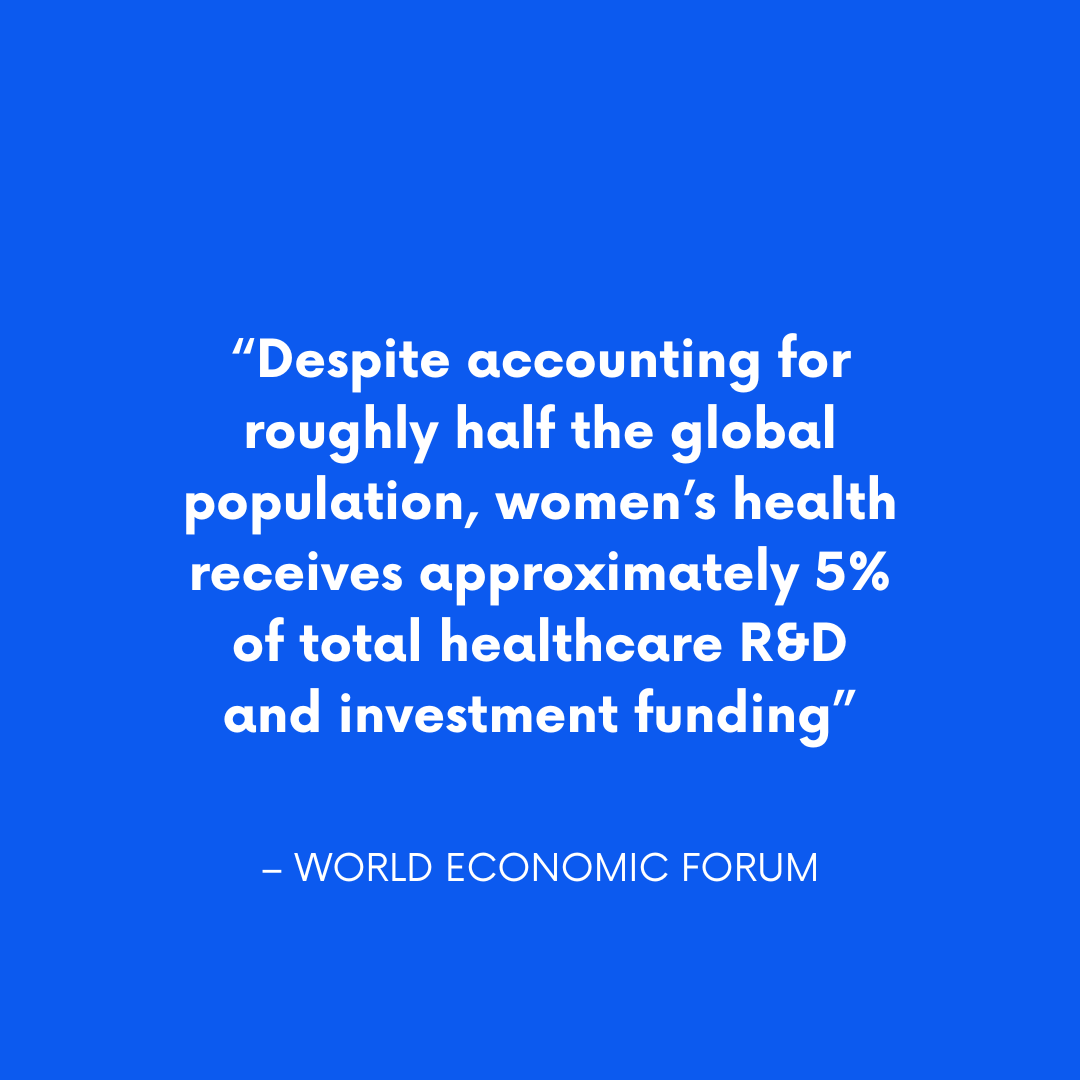
Despite representing roughly half the global population, women’s health receives only about 5% of total healthcare R&D and investment funding.
— World Economic Forum
One of the most significant structural inefficiencies is that only a small fraction of healthcare R&D and investment funding has historically been directed toward women’s health needs.
The result is not just a funding gap.
It is an operational gap.
Because when investment, research, and infrastructure are misaligned with disease burden, healthcare systems inherit complexity that they are not structurally prepared to manage.
That complexity now shows up directly inside care delivery.
As women’s health expands into a full lifecycle model, operational strain is becoming increasingly visible across provider organizations, health systems, and payer networks.
For healthcare executives, four consistent breakdown points are emerging.
Women’s health requires continuous engagement across decades.
However, most healthcare systems remain organized around discrete visits, conditions, or encounters.
This creates fragmentation across a patient’s lifecycle, particularly when care spans multiple specialties and care settings.
The result is repeated intake, inconsistent documentation, and disconnected treatment pathways.
As women’s health expands into multi specialty care, coordination requirements increase exponentially.
Primary care, OB GYN, cardiology, behavioral health, diagnostics, and pharmacy services all intersect.
In many systems, coordination is still largely manual.
This introduces delays, inefficiencies, and variability in care execution.
As PwC notes, the expansion of women’s health is not limited to clinical complexity.
It also increases administrative demand across scheduling, eligibility, documentation, payer communication, and prior authorization workflows.
These processes do not scale linearly with patient volume.
Instead, they compound operational burden as care becomes more complex.
Even with continued investment in digital transformation, true interoperability across providers, payers, and specialty systems remains inconsistent.
This is particularly problematic in women’s health, where longitudinal care requires seamless data flow across multiple disconnected entities.
The result is duplicated effort, delayed decision making, and reduced visibility into patient progression.
The expansion of women’s health is not occurring in isolation.
It is happening alongside workforce shortages, reimbursement pressure, and increasing demand for access and speed.
This creates a compounding operational challenge.
As PwC’s data shows, the market is not only growing in size but expanding in scope, complexity, and duration of engagement.
That combination puts direct pressure on healthcare operating models that were never designed for this level of sustained coordination.
In response, many healthcare organizations are investing in AI.
However, most early implementations focus on automation or point solutions.
The challenge is that in fragmented environments, standalone tools often increase complexity rather than reduce it.
The real shift happening now is not AI as a tool.
It is AI as infrastructure.
Embedded directly into workflows.
Connected across systems.
Designed to reduce friction rather than add another layer of abstraction.
In high complexity domains like women’s health, this distinction becomes critical.
Because the limiting factor is not intelligence.
It is coordination.
This is where Jorie becomes relevant as an operational layer inside healthcare organizations.
Rather than introducing another disconnected system, Jorie focuses on improving the efficiency of the workflows healthcare teams already rely on.
In the context of women’s health, this matters significantly.
Because as care becomes more longitudinal, multi specialty, and administratively complex, healthcare organizations need infrastructure that improves coordination without increasing operational burden.
By reducing manual workflow friction, improving visibility across tasks, and streamlining administrative processes, Jorie enables healthcare teams to scale operational capacity in line with clinical demand.
Women’s health is one of the most important growth opportunities in healthcare over the next decade.
But it is also a stress test for operational maturity.
PwC’s data makes this clear.
A market moving from approximately 440 billion dollars today to more than 600 billion dollars by 2030 is not simply expanding.
It is becoming more complex, more longitudinal, and more operationally intensive.
The organizations that succeed in this environment will not be defined solely by clinical innovation or market expansion.
They will be defined by their ability to operationalize care at scale.
That means:
Reducing fragmentation across systems
Improving coordination across specialties
Eliminating unnecessary administrative burden
And aligning workflows across the entire care continuum
This is where the next competitive advantage in healthcare will emerge.
Not from access to more care.
But from the ability to deliver it efficiently, consistently, and at scale.
As women’s health continues to expand as a strategic priority for healthcare organizations, operational readiness will become the defining factor of success.
Follow Jorie AI on Instagram: Instagram
Follow Jorie AI on Tiktok: Tiktok
Follow Jorie AI on LinkedIn: LinkedIn


.jpg)

